Guides.
Written-down versions of what I've worked out — so you don't have to relearn the hard way.
Showing 107 of 107 guides
-
 The Alfie BOXX: a box camera that develops its own prints Hands on with the Alfie BOXX, a box camera built for black and white paper reversal. Compose, expose onto paper, then develop the print inside the holder.
 -
 Paper reversal in a churchyard with a 1905 Cooke lens Back to black and white paper reversal after more than a year off, with the Stenopeika Caronte 4x5 and a Taylor-Hobson Cooke lens from around 1905.
 -
 Farewell to the Bronica ETRS One last shoot with a camera I have loved, before it heads to its new owner in Australia. Self-portraits on Kentmere 200 and Potsdam in my garage studio.
 -
 Rolleiflex 6006 review: a great camera I'm still selling After six months of failure, a broken first copy and a retired camera tech in Toronto, I finally got a working Rolleiflex 6006. So why am I selling it?
 -
 Harman Phoenix 2 review: an actual colour film now Hands-on review of Harman Phoenix 2 in 120, shot beside Phoenix 1 across two rolls in rural Gloucestershire. It is a real step on, and I am buying more.
 -
 Flash and black and white paper reversal: a 1000W test Can flash solve the long exposure problem in black and white paper reversal? I tested a Bowens Esprit 1000DX on a Stenopeika Caronte 4x5. It just works.
 -
 Harman Red 125 in 120: a film I still do not understand Harman Red is now in 120 alongside the original 35mm launch. I shot two rolls trying to work out what it is for. It makes red images, very competently.
 -
 Bronica ETRS portrait shoot in Toronto: when the Rolleiflex 6006 lets you down Bronica ETRS portrait shoot in a Toronto studio with model Sherri Johnson, when the Rolleiflex 6006 refused to work and the ETRS saved the day.
 -
 Inside the Armstrong Hall: a theatre frozen at lockdown Thornbury's Armstrong Hall closed at the start of UK lockdown and stayed shut four years. Before it reopens I went in with a 4x5 and 24 sheets of FP4.
 -
 Kentmere Pan 200 review: a budget film with real character Kentmere Pan 200 is Ilford's new budget film, between Pan 100 and 400. Tested on Bronica GS1 and Rolleiflex SLX, it is so good at around £5 a roll.
 -
 Sekonic L858-D review: six months with the gold standard An honest review of the Sekonic L858-D SpeedMaster after six months of use, including for the paper reversal project. It is brilliant, and expensive.
 -
 Stenopeika Caronte 4x5: the cypress-wood field camera Stenopeika's new Caronte 4x5 is a premium step up from the Air Force 4x5, with a Tuscan Cypress body and all-metal base. First impressions from the studio.
 -
 Missing my Bronica S2A: an appreciation I am in Canada and my Bronica S2A is at home, and I miss it. A quiet appreciation of the camera that has become part of the family over seven years.
 -
 Leica M6 vs Texas Leica: Portra 400 in two rangefinders A street photography collaboration in Toronto, putting a Leica M6 against a Fuji GSW690iii on the same Portra 400, in the same streets. Not a competition.
 -
 Fuji GSW690iii review: a camera that might be too good The Fuji GSW690iii makes immaculate 6x9 negatives from a fixed 65mm super-wide lens. It is bulletproof and flawless. So what do I actually do with it?
 -
 K&F Concept A254C4 tripod review: birds at minus fourteen An honest review of the K&F Concept A254C4 carbon fibre tripod and B-35L ballhead, plus my slow-motion disaster photographing birds in sub-zero Toronto.
 -
 Stenopeika Minutero 2.0: paper reversal at the kitchen table The Stenopeika Minutero 2.0 develops 4x5 black and white paper inside the holder itself, no darkroom needed. After one session it changed how I work.
 -
 Reveni Labs Lumo review: a $200 light meter that delivers Hands-on with the Reveni Labs Lumo, a tiny multi-function light meter that does nearly everything a Sekonic L858-D does for about a fifth of the price.
 -
 Building a massive DIY ultra large format box camera How I built a 20x16 ultra large format portrait box camera from plywood, a WWII aerial lens and 3D-printed cones, for about £300. The build and lessons.
 -
 Sirui C150X Lite review: a 150W light for paper reversal The Sirui C150X Lite is a 150-watt constant light for semi-pro work, with a battery handle and QR40 softbox. Bright enough even for low-ISO paper reversal.
 -
 Zeiss Ikon Ikonta 520: a 90-year-old 645 folder for £20 The Zeiss Ikon Ikonta 520 dates from 1932. Fully mechanical and pocketable, with a 70mm f3.5 Tessar. About £20 on eBay, and the results are extraordinary.
 -
 Multi-exposure paper reversal portraits for a Vienna show Asked to submit to a Vienna exhibition, I made a series of multi-exposure self-portraits on black and white paper reversal. Unexpected and rather lovely.
 -
 Jaggle Berlinova review: darkroom prints in daylight The Jaggle Berlinova is a daylight printing system that makes analogue enlargements with no darkroom, the way daylight tanks process film without one.
 -
 Black and white paper reversal: a paper and developer test Sixteen papers, eleven developers and four days in the darkroom, hunting what reduces contrast in black and white paper reversal. Ansco 120 made it work.
 -
 Harman Phoenix 120 review: a colour film for medium format Harman Phoenix arrived in 120 in 2024, the first all-new colour film for medium format in years. I tested it in confetti fields, a Holga and the studio.
 -
 Lomo LC-A 120 review: a medium format point-and-shoot The Lomo LC-A 120 is an auto-exposure point-and-shoot shooting 6x6 on 120. I took it across Botswana and Namibia, loved the lens, and wanted one anyway.
 -
 Zhiyun Cinepeer CF100: a stick light for film photography? The Zhiyun Cinepeer CF100 is an LED stick light aimed at video. I tested it for film portraits, even dry plates at ISO 2, and the shape of it won me over.
 -
 Stenopeika Air Force 4x5: a great first large format camera Eighteen months with one large format camera. A long-term review of the Stenopeika Air Force 4x5, the entry-level field camera I use for all my 4x5 work.
 -
 AstrHori XH-2 review: a good meter, a comedy of my errors The AstrHori XH-2 is a compact reflective hot shoe meter that styles beautifully on a Bronica ETRS. It is great. I am the problem here, not the meter.
 -
 Freewell V2 Hybrid review: a variable ND and polariser The Freewell V2 Hybrid combines a 3-to-7-stop variable ND and a circular polariser in one filter. Tested on 4x5, the stop markings make film exposure easy.
 -
 Fuji GX680 review: a £40 beast with insane image quality The Fuji GX680 is the biggest medium format SLR I have owned, and it makes the sharpest images I have got from film. Dead batteries make these dirt cheap.
 -
 Mamiya RB67 review: a great camera, but most are ruined The Mamiya RB67 is a great medium format camera in good condition. The problem is most for sale are not. I bought three and returned two. What to look for.
 -
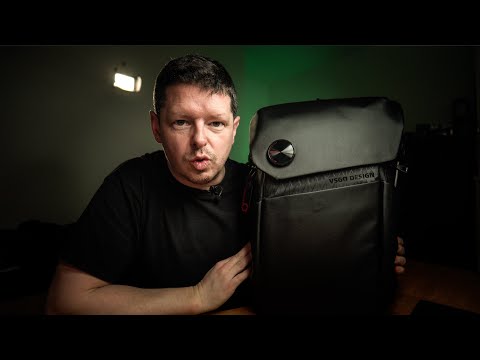 VSGO Black Snipe 25L review: the camera bag I've been looking for A camera bag actually built right for large format film shooters. Rigid body, fully customisable interior, genuinely secure tripod mount, $250.
 -
 Building an ultra large format pinhole camera out of a cardboard box Stenopeika launched an 11x14 ultra large format camera. I cannot afford one. So I built a 12x16 pinhole camera out of a cardboard box for under £10.
 -
 Pentacon Six TL review: cheap, capable, and only as good as the lens you put on it Pentacon Six TLs are everywhere and they're cheap, which is the bit that matters. The body is fine. The Carl Zeiss lenses are the reason to buy in.
 -
 Photographing Thornbury Men's Shed on four different cameras Thornbury Men's Shed on four cameras. The place is brilliant. The cameras were a mixed bag. The panoramic Brownie 2A took two attempts to get right.
 -
 Printing or scanning: how the same negative can look completely different Lomography Berlin Kino 400 looked rough when scanned. Printed properly in the darkroom, the same negatives look great. Worth knowing about.
 -
 Black and white paper reversal: the technique that actually works Six shoots, dozens of test sheets, three findings. ISO 1.8 for paper reversal in UK winter light. Develop to completion. Yellow filters cost four stops.
 -
 Lomography Berlin Kino 400 review: is the film supposed to look like that? Lomography Berlin Kino 400 has a startlingly dark film base. Two rolls and two developers later, I am sure that yes, it is supposed to look like that.
 -
 AstrHori AH-M1 review: a hot shoe light meter you are supposed to sand down The AstrHori AH-M1 is a hot shoe meter you are encouraged to sand the paint off. It is also a perfectly decent meter. Both things are true.
 -
 Lomography Lady Grey 400 review: a well-behaved black and white film Lomography Lady Grey 400 surprised me. Fine grain for a 400 film, controlled contrast, clean rendering. Not what I expected from Lomography at all.
 -
 Black and white paper reversal: 4x5 prints for 25p a sheet Black and white paper reversal lets you shoot 4x5 prints for around 25p a sheet, no negatives needed. Cheap, hands-on and tricky. How it works.
 -
 Kiev 60 review: not a Pentacon Six copy, and arguably the better camera The Kiev 60 is dismissed as a Soviet Pentacon Six copy. It is neither a copy nor a worse camera. With Carl Zeiss Jena glass it is genuinely excellent.
 -
 Sitting for a wet plate collodion portrait with Guy Bellingham FRPS Wet plate collodion produces something nothing else can. I sat for three portraits with Guy Bellingham FRPS, one of the world's best at this process.
 -
 Negative Thinking: the Bristol community darkroom run on a mission, not margins Negative Thinking is a Bristol community darkroom run by Tim and Emily. £5 an hour, £50 workshops. The pricing is the mission, not a tactic.
 -
 Alfie TYCH review: a brand new half-frame 35mm camera worth taking seriously The Alfie TYCH is a half-frame 35mm with four lens options including a pinhole and a zone plate. Genuinely new design. Mine earned its keep on holiday.
 -
 Zebra dry plate tintypes take two: working out the exposure by trial and error Second attempt at Zebra dry plate tintypes. Two packs of plates later I got one I genuinely like. Lessons on exposure, latitude and the guidance.
 -
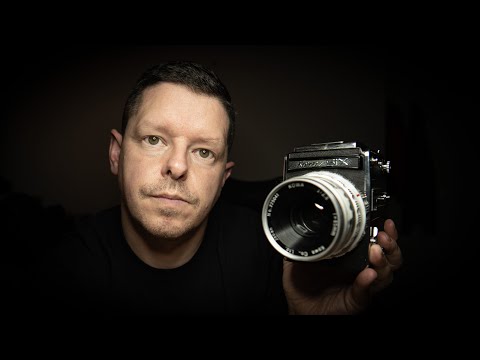 Kowa Six review: a great camera, until I broke it The Kowa Six is a Japanese 6x6 SLR from the late 60s. Lovely portraits in the right hands. Mine gummed up after two rolls. Know this before you buy.
 -
 Zebra dry plate tintypes review: the affordable cousin of wet plate collodion Zebra dry plate tintypes give you wet plate collodion aesthetics without the wet workflow. Mixed first results and lessons learned for next time.
 -
 Landscape photography on the Bronica ETRS in Snowdonia, and why the results don't excite me I took the Bronica ETRS to Snowdonia for landscape photography. The place was breathtaking. The photographs were fine. Working out what that means.
 -
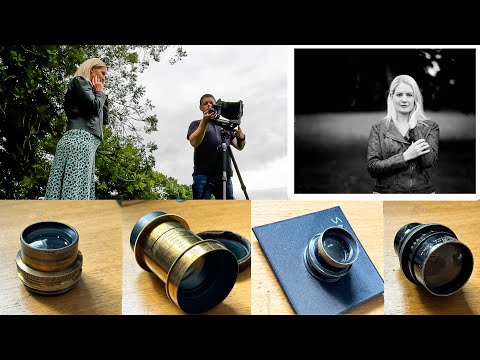 Testing four antique large format lenses: Ross, Emil Busch, Oscar Simon, Perken Son and Rayment Four antique brass large format lenses from 1895 to 1924 tested side by side on 4x5. Honest findings on what one shoot can and cannot tell you.
 -
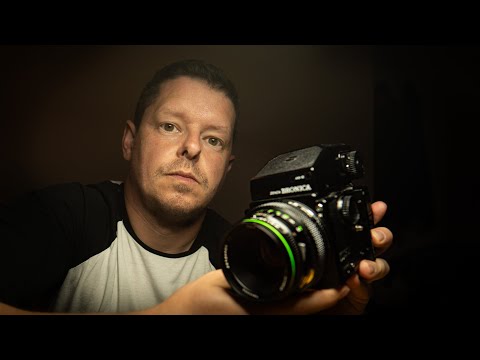 Bronica ETRS review: the 645 camera I am keeping The Bronica ETRS converted me to 645. Sharp lenses, sensible electronics, solidly built, comfortable to carry. A keeper for me.
 -
 Can you shoot wildlife on a 4x5 view camera? Yes, but you shouldn't I tried wildlife on a 4x5 view camera at a South African game reserve. Technically possible. Practically nope. Here is why you should not bother.
 -
 Zeiss Ikon Box Tengor 56/2 review: king of box cameras or just another box camera? The Zeiss Ikon Box Tengor 56/2 has a reputation as the best box camera ever made. My experience says it is fine but not exceptional. Here is why.
 -
 Large format photography in South Africa: a landscape I am actually proud of, and a smashed camera A Cradle Moon shoot with the Stenopeika 4x5 and a Busch Aplanat. Got a landscape frame I am proud of, then dropped the camera and broke it.
 -
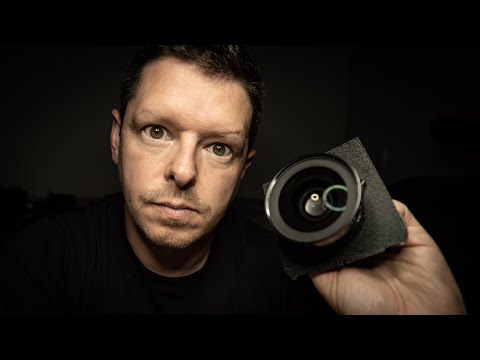 Photographing birds of prey on 4x5 at Wren Birds of Prey, with the Nikkor 65mm SW A morning at Wren Birds of Prey with Jenny and her rescue birds, shot on 4x5 with my new Nikkor 65mm SW. Hard, lovely, instructive.
 -
 Mamiya 645J review: a budget classic I really liked, but eventually sold on The Mamiya 645J is the budget Mamiya 645. Cracking little camera, great lenses, comfortable handling. I sold mine to keep the Bronica ETRS instead.
 -
 Stenopeika Air Force 4x5 first impressions: my new large format field camera First impressions of the Stenopeika Air Force 4x5 from Samuele in Italy. Lovely build, clever zeroing tabs, comprehensive movements, good value.
 -
 Holga 120N review: a thoroughly bad camera that I genuinely enjoyed First time using the Holga 120N after 30 years of film. Technically awful camera that frees you from precision and lets you just take photos.
 -
 Medium format film cameras: a guide to what is out there beyond the top-ten lists A guide to medium format film cameras by category. Not a best-of list. A map of what exists, is cheap, and gets overlooked by top-ten lists.
 -
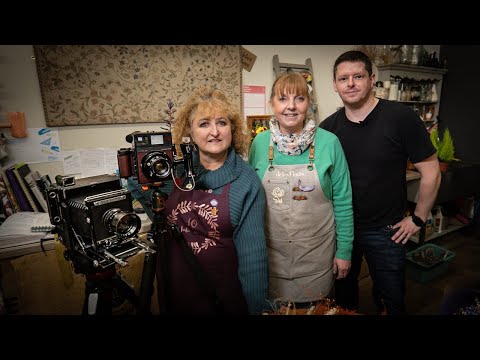 Jolies Fleurs, Thornbury: a florist shoot with the Mamiya Super 23 and Speed Graphic Photographing Jolies Fleurs in Thornbury with the Mamiya Super 23 and Speed Graphic 4x5. Brilliant team, lovely florist, plus a learning experience.
 -
 Photography inspiration: active vs passive, and clearing my creative block at Llanthony Priory Creative block, every shoot coming home empty. Active vs passive photography started clearing it. Tested at Llanthony Priory in the Black Mountains.
 -
 Building a garage darkroom and printing for the first time in 30 years How I built a garage darkroom with an Intrepid 4x5 enlarger, plus my first printing session and what analogue printing actually feels like in hand.
 -
 Shooting self portraits on film, with the Reveni Labs Remote Release and a Trioplan 100mm A morning of self-portraits in the woods on the Bronica S2A, with the Reveni Labs Remote Release and a Meyer Trioplan on a Simon Forster adapter.
 -
 Scanning film negatives at home with a DSLR and pixl-latr My setup for scanning 35mm, 120, 4x5 and glass plate negatives at home with a digital camera and the pixl-latr holder. The kit, process and problems.
 - Camera scanning negatives with the PIXL-LATR: the gadget that actually speeded up my workflow How I scan film with a digital camera, the PIXL-LATR negative holder, and my full setup. The first gadget that made my workflow faster, not slower.
-
 Bronica S2A on tour Part 2: shooting wildlife in Kruger National Park, unprepared and impressed Driving through Kruger National Park between work meetings on the Bronica S2A with no telephoto lens, no expectations, and one keeper elephant frame.
 -
 Bronica S2A on tour Part 1: a Namibian road trip from Windhoek to Solitaire A day-long road trip across Namibia from Windhoek to Solitaire on Kodak Gold and FP4 with the Bronica S2A, plus extraordinary desert landscape.
 -
 Best medium format camera for travel: choosing between SLR, TLR, folder, and box for an Africa trip Choosing one medium format film camera for a three-week Africa work trip. Five criteria, ten cameras considered, one surprisingly difficult decision.
 -
 620 film at Trashman Treasures: a Vollenda and a Brownie Flash B Two 620 cameras from Trashman Treasures in Wickwar, a Kodak Vollenda and a Brownie Flash B. The first shoot was a disaster. The second one worked.
 -
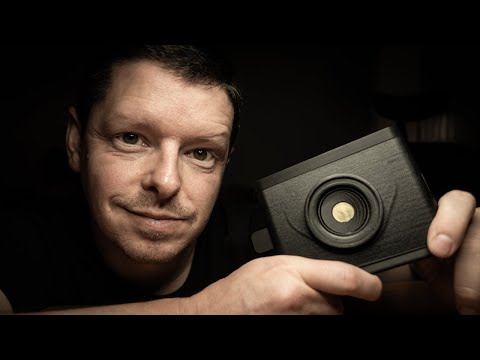 Chroma Cube66 review: the first pinhole camera that actually got me The Chroma Cube66 is a 6x6 medium format pinhole camera by Steve Lloyd of Chroma Cameras. Shot in St Arilda's churchyard and woods on FP4 and Pro 400H.
 -
 Re-skinning a Bronica S2A in faux snake skin Re-skinning the Bronica S2A in faux snake skin from Milly's Cameras. The full process, including the solvent test that worked and the cutting mistakes I made.
 -
 3x4 Speed Graphic: a Craigslist find and a homemade ground glass A 3x4 Speed Graphic found on Craigslist in Alaska, with a Graflex 23 back for 120 film. Plus how I made a ground glass out of Perspex from a Home Depot.
 -
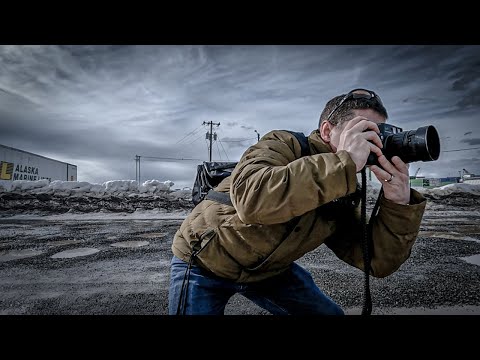 Fuji GW690iii Part 2: Downtown Anchorage and Why I Sold It Part 2 of the Fuji GW690iii in Alaska. Downtown Anchorage on Ilford Delta 100 and Kodak Ektar, the camera that won me over and the reason I sold it.
 -
 Fuji GW690iii in Alaska, part one: the camera with the nickname I refuse to use First outing with the Fuji GW690iii in snowy Alaska, on Ilford FP4 and Kodak Ektar. A modern 6x9 mechanical rangefinder with a nickname I am refusing to use.
 -
 510 Pyro vs HC-110: a 4x5 side by side and a chat with James Lane A 4x5 side by side test of 510 Pyro and HC-110 on FP4 at St Arilda's church, plus the chemistry of pyrogallol staining explained by James Lane of Zone Imaging.
 -
 Six airport scans on a bag of film: a 2022 test, with a 2026 footnote What happens when you forget about a bag of film for a four-week Costa Rica trip and let it sit through six airport scans. A 2022 test plus a 2026 update.
 -
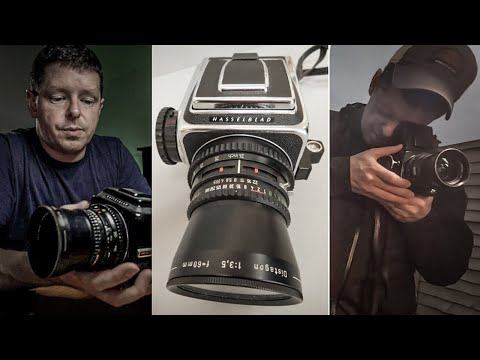 Hasselblad 500C/M review: are they really that special? Are Hasselblads worth the hype and the money? I borrowed a 500C/M for a day of portraits to find out. Yes, they really are, and that is almost the problem.
 -
 Rolleiflex SLX review: the auto-winding 6x6 I decided to keep Review of the Rolleiflex SLX, a 1976 auto-winding electronic 6x6 SLR with shutter priority auto exposure, leaf shutter lens and a notable battery problem.
 -
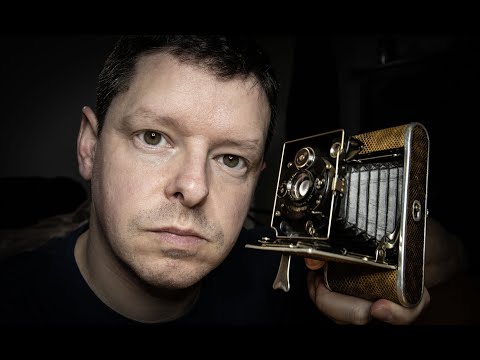 Krauss Rollette Luxus review: shooting 127 film in a 129 camera Review of the Krauss Rollette Luxus, a 1928 German folder for long-extinct 129 film, plus a workaround that lets you shoot 127 film through it with a washer.
 -
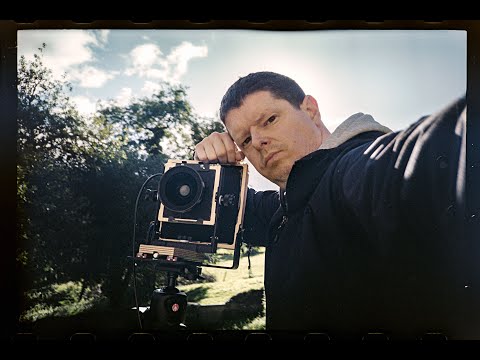 Large format at Llancaut Church: a Wye Valley walk with the Intrepid 4x5 A 4x5 walk to the medieval ruins of Llancaut Church in the Wye Valley with the Intrepid, two sheets of film (Delta 100 and Ektar) and a Ricoh R1 in the bag.
 -
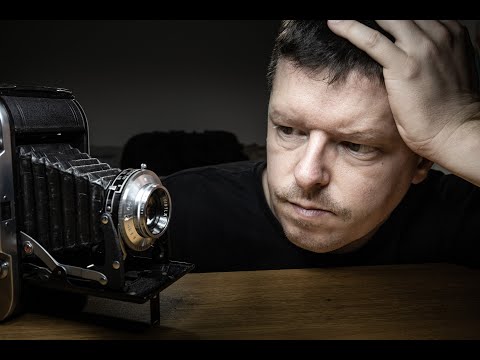 Voigtländer Bessa I review: a 1951 6x9 folder with the Vaskar 105mm Review of the Voigtländer Bessa I, a 1951 6x9 medium format folder with the Vaskar 105mm f/4.5 lens, shot around Chepstow Castle on FP4 after a deep clean.
 -
 Lens fungus removal: cleaning a Voigtländer Bessa I lens with ammonia and peroxide How to remove fungus from a Voigtländer Bessa I lens with ammonia and hydrogen peroxide, plus disassembly notes and re-calibrating the infinity focus.
 -
 Mamiya C330 Pro F review: a genuinely capable TLR I sold without regret Mamiya C330 Pro F review: the 1972 medium format TLR with interchangeable lenses and bellows focusing, shot on FP4 in a Bristol field with an honest verdict.
 -
 A Viking portrait shoot in a forest: 4x5 large format with a homemade costume A Viking themed character shoot in a forest, on the Toyo 4x5 with FP4 and Ektar plus a mystery Dallmeyer 8.5 inch lens that turned out to be a revelation.
 -
 Three new lenses for the Bronica S2A: a 6x6 test in Tetbury Three Bronica S2A lenses tested on 6x6: a wide 50mm Super-Komura, the standard 75mm Nikkor PC and a 150mm Zenzanon, with portraits shot in Tetbury.
 -
 The best glue for camera leatherette: testing eleven options Testing eleven different glues and tapes for sticking camera leatherette, from contact adhesives and PVA to super glue and E6000, with one clear winner.
 -
 My first large format pinhole shoot: making the lens board and finding the limits Making a 0.4mm brass pinhole lens board for the Intrepid 4x5 then shooting Ashley Robson on Foma 400 at Worcester Lodge, with mixed results and open questions.
 -
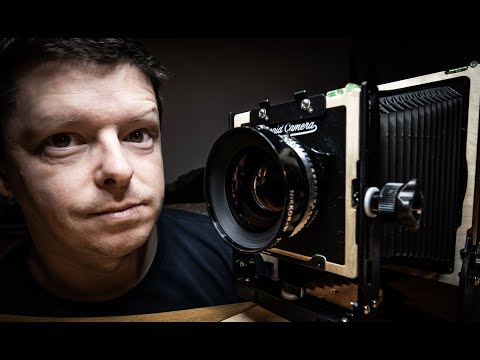 Intrepid 4x5 Mk IV review: a £250 field camera for portable large format Intrepid 4x5 Mk IV review: a £250 plywood field camera at a quarter of the weight of a monorail, with the trade-offs that come with that price.
 -
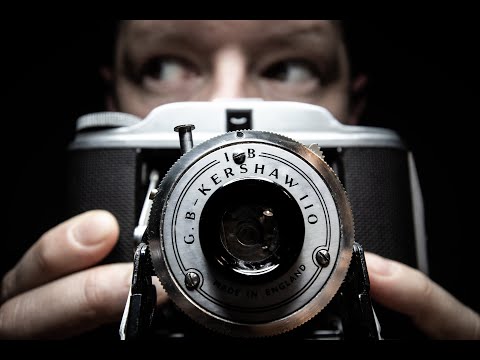 GB Kershaw 110 review: a £5 1950s folder from Leeds that punches well above its weight GB Kershaw 110 review: a basic 1954 folder from Leeds with a meniscus lens, two apertures and a genuinely interesting history behind the GB Equipments name.
 -
 What is 120 film? A complete guide to medium format 120 film is the medium format roll film most photographers move to after 35mm. What it is, how it differs, how to load it, and how the frame sizes work.
 -
 Large format night photography on 4x5: a freezing experiment with FP4+ and the reciprocity tables Large format night shoot on 4x5 with the Toyo 45C and Nikkor SW 90mm, working through FP4+ reciprocity failure on a freezing February evening at St Arilda's.
 -
 Bronica S2A focusing screen saga: how 1mm of plastic taught me about camera tolerances Replacing the focusing screen on a Bronica S2A with a Rick Oleson Brightscreen, learning how tight the tolerances are on a 1970s medium format SLR.
 -
 Straightening verticals on 4x5: camera movements explained with the Nikkor SW 90mm at St Arilda's Using rear standard tilt and front rise on the Toyo 45C with a Nikkor SW 90mm to correct keystoning on a church, with the technique properly explained.
 -
 Canon AE-1 Program review: 27 years, three rolls and the camera that got me into photography Canon AE-1 Program review: the 1981 Canon SLR that brought Program AE to the entry level, plus three rolls of film shot around Oldbury-on-Severn.
 -
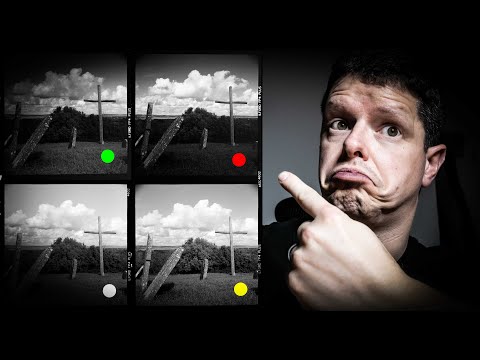 Colour filters in black and white photography: what they do, when to use them and why green still has a place How colour filters work in black and white photography, with side-by-side FP4 tests through a Yashica 635, and why green is more useful than it looks.
 -
 Narrative photography on 4x5: a man on the run with Ashley Robson and a 100-year-old Tessar First real outing for the 1920s Carl Zeiss Jena Tessar 135mm on 4x5, a narrative shoot with Ashley Robson in Shaw Forest Park, and a fixer problem to solve.
 -
 Hacking my way into large format photography: £175, a 100-year-old lens, a Toyo 45C and a homemade lens board How I got into 4x5 large format photography for £175 by combining a 1920s Zeiss Tessar from a Camera Rescue outlet box with a £90 Toyo 45C from eBay.
 -
 Agfa Synchro Box review: a 1950s German box camera that shoots a colossal 6x9 negative for £40 Hands-on review of the Agfa Synchro Box 600, a 1951 German box camera shooting 6x9 on 120 film with a single-element meniscus lens and built-in yellow filter.
 -
 How I cleaned a dead fly off the prism of my Mamiya 528AL (a slightly cautionary tale) An honest writeup of taking apart a Mamiya 528AL to clean a dead fly off the pentaprism, with the benefit of hindsight on what I should have done differently.
 -
 Gerlach Nixette review: a £12 1954 German folding camera that is hard to beat for the money Hands-on review of the Gerlach Nixette (Nixon Nixette), a 1950s German 6x6 folding camera with an unusual single-fold bellows and a Supra Anastigmat lens.
 -
 Rolleicord III review and shoot: a 70-year-old German TLR with a scratched lens and real character Hands-on review and shoot test of the 1950 Rolleicord III TLR with Schneider Xenar 75mm f/3.5, compared with the Yashica 635, with a scratched-lens twist.
 -
 Bronica S2A in-depth review and shoot: the Japanese Hasselblad and the satisfying car-door-slam shutter Hands-on review of the Bronica S2A 6x6 medium format SLR, with side-by-side comparison to the Bronica S2 and an abstract garage shoot demonstration.
 -
 How to tell a Bronica S2 from a Bronica S2A: an identification guide (with the usual debates) Practical guide to identifying a Bronica S2 vs S2A by serial number, winding knob, knob centre and neck strap lugs, with caveats about disputed claims.
 -
 Bronica S2 and S2A infinity focus fix: replacing the ground glass foam (a DIY repair with a confession) How to fix the classic Bronica S2 and S2A infinity focus problem by replacing the degraded foam under the ground glass, with all my mistakes left in.
 -
 Mamiya 528AL review: the last leaf-shutter SLR, a curious 35mm camera from the end of an era Hands-on review of the Mamiya 528AL, a 1975 fixed-lens leaf-shutter 35mm SLR with 48mm f/2.8 Sekor lens, shot with Kentmere Pan 100 at Severn Beach.
 -
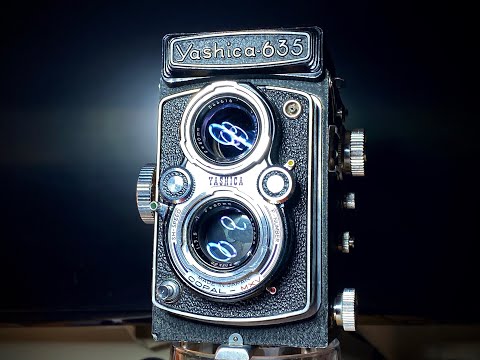 Yashica 635 review: the dual-format TLR that takes 120 and 35mm film, and remains my favourite Hands-on review of the Yashica 635 TLR with 80mm f/3.5 Yashikor lens, Copal MXV shutter, dual 120 and 35mm capability, plus a Severn Bridge test shoot.